Last Updated on November 2, 2026 | Published: November 2, 2026 published by Jenny Tomei
When we talk about social media and eating disorders in schools, attention focuses on food.
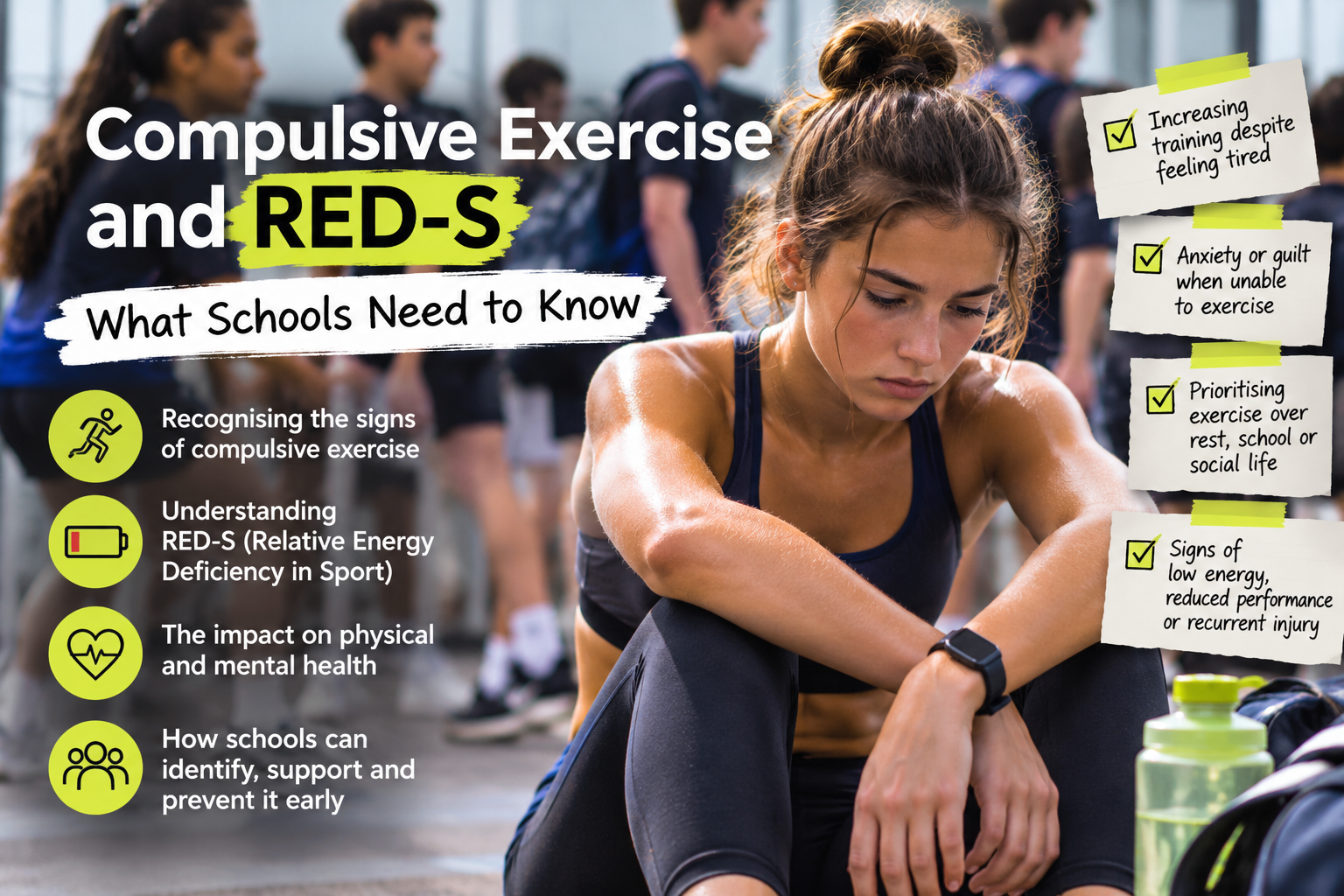
However, for some young people, warning signs show up first in the track, in the gym, or on the pitch.
A pupil who never misses a training session can be praised for commitment.
Sometimes that’s exactly what it is.
Sometimes it’s something else.
I know this from the inside. In my early twenties, I ran at national level. I also had anorexia, exercise addiction and RED-S (Relative Energy Deficiency in Sport), and I lost my period. Nobody around me talked about it, and nobody checked in with me. I suffered with extreme burn out, RED-S, and PMDD, it took years to reserve! I can’t stress how important it is for coaches to edcuate young athletes on how to eat and train around your periods, this is normal!
On a recent episode of the JenUp Podcast, I spoke with Stephanie Van Shaik, a licensed mental health counsellor and founder of State of Balance Mental Health Counseling Services in the US. Stephanie is a certified dialectical behaviour therapist (DBT) and specialises in eating disorder recovery, body image, trauma and perfectionism, working across binge eating disorder, bulimia, anorexia and ARFID.
Much of our conversation was about adults, including people using weight loss injections. But the patterns we discussed (exercise as compensation, guilt about rest, sport as a whole identity, lost periods that nobody questions) are exactly the ones I see in schools. This guide pulls out what’s most useful for school counsellors, PSHE leads, PE staff and pastoral teams.
Podcast Episode: https://open.spotify.com/episode/5lVBAWHkKzzjR0l3SjT6v7?si=31120fe90b804cfc
When exercise stops being healthy
Let me say this clearly first: movement is good for young people. Stephanie described herself as “a huge fan” of exercise for both mental and physical health, and so am I. I’m a personal trainer. The question isn’t how much a pupil exercises, in the context of social media and eating disorders. It’s what role exercise is playing in their life.
Stephanie put it simply. Exercise becomes a concern when someone is:
- using it to compensate for what they’ve eaten
- feeling intensely guilty or anxious if they miss a session
- unable to rest without feeling lazy or “behind”
- using it to escape difficult emotions
- regularly pushing themselves to the point of complete exhaustion
On the outside, two pupils on the same team can look identical. As Stephanie said, for one person running brings endorphins and joy; for another, the thought is “if I do less than yesterday, I’m a failure.” Same activity, completely different experience.
Why it’s easy to miss in school
Compulsive exercise often looks like dedication. Teachers and coaches tend to reward it: the pupil who trains through injury, never takes a day off, and always gives everything. That’s why it’s worth knowing what to listen for, not just what to look at.
Signs of compulsive exercise in pupils
No single sign proves anything. Look for patterns and for changes from how a pupil usually presents:
- distress or agitation when a training session or PE lesson is cancelled
- training through injury or illness, or returning too early
- talking about needing to “earn” food or “burn off” what they’ve eaten
- extra, secret or unplanned exercise on top of scheduled sessions
- difficulty sitting still or resting, even when clearly tired
- describing themselves as “lazy” on days they don’t train
- comparing how much they do with teammates, and worrying about falling behind
- seeming drained rather than energised after exercise, most of the time
- a sport or activity seeming to be their entire sense of who they are
Questions that open a conversation
Before we recorded, I put together some reflective questions. They’re the ones I wish someone had asked me years ago. They work well for staff to adapt in a calm, private conversation with a pupil, or as reflection prompts in a PSHE lesson on exercise and wellbeing:
- When and why do you exercise? Exercise is there for mental health and enjoyment, not to burn off food. Being honest about the reason is the starting point.
- How do you feel if you miss a session? Stephanie called a lot of anxiety or guilt here “a big red flag”.
- Do you exercise because you enjoy it, or because you feel you have to? If the answer sounds like “if I don’t, I can’t have dinner” or “I’ll have to double up tomorrow”, that’s compensation.
- What feelings does exercise help you manage? Exercise can genuinely help with stress. But as Stephanie said, it can also be a way to “outrun” body image worries or avoid emotions, and those emotions eventually catch up.
- Can you rest without feeling guilty? Rest isn’t a reward to be earned. It’s necessary.
- Do you usually feel energised afterwards, or completely wiped out? Even after a tough session, there should be something left in the tank for the rest of the day.
These questions are curious rather than accusatory. They give the pupil a chance to notice the pattern for themselves, rather than being told what to think.
RED-S and lost periods: the conversation schools often avoid
RED-S stands for Relative Energy Deficiency in Sport. Put simply, the body isn’t getting enough energy for what’s being asked of it. I had RED-S as a runner. I lost my period, and so did others in my training group. We knew, because we talked to each other about it. But no adult ever asked.
My message to every young person, parent, coach and teacher is the same: if someone loses their period, it should be checked out straight away. I didn’t, and I ended up with a significant hormonal imbalance that took many years to put right.
Stephanie described a missing period as one of the first ways the body says, “Something’s wrong. Please tend to me.” It isn’t only about fertility. Stephanie explained that a regular cycle matters for bone health, and that she has known people in their twenties diagnosed with osteopenia, and sometimes osteoporosis, after years without a period.
What this means for PE staff, coaches and pastoral teams
- Normalise talking about periods as part of health and sport, not as something embarrassing or private to the point of silence.
- If a pupil mentions their periods have stopped or become irregular, encourage them (and, where appropriate, their parents or carers) to see their GP, and follow your school’s pastoral and safeguarding procedures.
- Don’t assume a missed period is “normal for athletes”. It’s a signal, not a side effect to accept.
We also discussed the pill being offered as a first fix. Stephanie’s point was that it may produce a monthly bleed, but it doesn’t resolve what’s underneath, and it can remove the very marker that shows when the body is recovering. School staff shouldn’t advise on treatment, but it’s reasonable to encourage families to have a full conversation with their GP about the cause, not just the symptom.
I’ve been working with a health psychologist who specialises in eating disorders to create resources on amenorrhoea (the loss of periods) for coaches, teachers, young people and parents. You’ll find them on the JenUp REDs hub, which will soon be live.
When sport becomes a young person’s whole identity
Running was my life. My training, my focus, who I was. Then I got ill, picked up too many injuries, and couldn’t go back. I lost my sense of identity almost overnight, and depression followed.
Stephanie said she sees this often, particularly with runners. Belonging to a team or sport can be wonderful. But if an eating disorder is involved and something changes, such as an injury or being told to step back, it doesn’t just disrupt training. It disrupts who that person believes they are.
“It’s diversity in who we are. If one thing goes by the wayside, and anything could change in an instant, then what? If we have other things that also make up who we are, it’s not such an identity shock.” — Stephanie Van Shaik
For schools, this is a practical point. Pupils who are injured, dropped from a team, or advised to rest may need pastoral check-ins, not just a physio referral. And it’s worth encouraging every young athlete to have more than one thing that makes them who they are.
Perfectionism, high achievers and neurodiversity
Stephanie specialises in perfectionism, and it came up again and again. My own drive to empty the tank every single session came from a perfectionist, high-achieving place: if I hadn’t completely depleted myself, it wasn’t good enough. It took years of work on the perfectionism underneath before that changed.
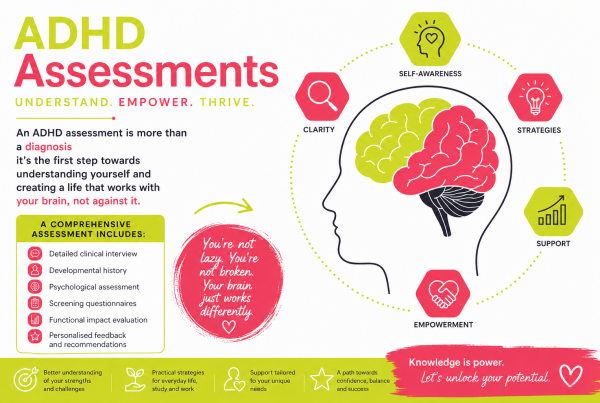
I was diagnosed with ADHD two years ago. Looking back, the hyperfocus and all-or-nothing intensity poured fuel on my training and my eating disorder. Stephanie explained that eating disorders rarely exist in isolation. They often sit alongside anxiety, depression, OCD, trauma or body dysmorphia, and young people with ADHD or autism may struggle in different ways. Each extra layer adds complexity, which is why a pupil’s whole profile matters.
In school, this means the “model student” (driven, organised, never misses training, top of the class) can be the one who needs a quiet check-in most.
GLP-1s, “food noise” and the messages young people absorb
The other big theme of our conversation was GLP-1 medication, often called weight loss injections. These are prescription medicines, and our discussion was about adults using them. But young people hear the conversations happening around them, at home and online, and some of the language is worth staff being aware of.
One of the big selling points is that these medicines quieten “food noise”, the constant thoughts about food. I find that term frustrating. It isn’t a scientific term, and in my experience a lot of that noise comes from dieting and under-eating in the first place. When the body isn’t getting enough, it keeps reminding you about food. That’s what it’s designed to do.
Stephanie’s concern was that turning down the noise isn’t the same as resolving it:
“Once you are no longer on the GLP-1s… that all comes back. If you’re not dealing with the underlying things that fuelled the behaviours in the first place, then as soon as that’s taken away, we’re left with all the emotions and the thoughts that made your relationship with food difficult.”
She also used an image that works well with pupils when talking about food and exercise: food is fuel, and suppressing hunger is like removing the fuel gauge from a car. You don’t know you’re running low until you’re stranded at the side of the road.
For PSHE, the useful message isn’t about any particular medication. It’s that hunger is a helpful signal, not something to fight or silence, and that active young people need to eat enough to fuel what they do.
How to respond if you’re worried about a pupil
- Choose a private, calm moment. Avoid raising it in front of teammates or in a busy changing room.
- Focus on wellbeing, not weight or appearance. “You’ve seemed really drained after training lately. How are you doing?” works better than comments about their body or how much they eat.
- Be curious about the role exercise plays. The reflective questions above are a good guide for you to use.
- Don’t simply ban exercise. Removing it suddenly, without support, can increase anxiety and push behaviour out of sight. Decisions about stepping back belong with the young person’s GP and treatment team.
- Record and share patterns. Several staff each noticing one small thing (a PE teacher, a form tutor, a coach) can add up to a clear picture. Share with your pastoral lead or DSL in line with school policy.
- Involve parents and carers as partners, and encourage a GP appointment, particularly if periods have stopped.
- Act early. As Stephanie said, there’s no shame in getting help, and “the worst-case scenario is that you’re just being too proactive.”
FAQs
What is compulsive exercise? Compulsive exercise is when exercise stops being something a person chooses and enjoys, and becomes something they feel driven to do, often to compensate for food, manage emotions or avoid guilt. The amount of exercise matters less than the role it plays and how the person feels when they can’t do it.
How can I tell the difference between a dedicated athlete and a pupil with compulsive exercise? Look at how they respond when training doesn’t happen. Dedication can cope with a cancelled session or a rest day. Compulsive exercise tends to come with intense guilt, anxiety, compensating later, or calling themselves lazy. Training through injury and seeming constantly exhausted are also worth noticing.
What is RED-S? RED-S (Relative Energy Deficiency in Sport) happens when the body doesn’t have enough energy available for the demands being placed on it. A common early sign in girls and women is periods becoming irregular or stopping.
A pupil has told me her periods have stopped. What should I do? Take it seriously, and encourage her (and her parents or carers, where appropriate) to see her GP as soon as possible. Follow your school’s pastoral and safeguarding procedures. A missing period is one of the body’s early warning signs, and it matters for bone health, not only fertility.
Should we stop a pupil from doing sport if we’re worried? Not as a first step, and not without support. Some young people do need a break, either because they aren’t medically cleared or because exercise has become compulsive, but that decision should involve their GP and family. For others, the work is about rebuilding a healthier, more balanced relationship with movement.
Is it OK to talk to pupils about weight loss injections in PSHE? It’s usually more helpful to focus on the underlying messages pupils are absorbing, such as the idea that hunger should be silenced, rather than on any specific medication. Questions about any young person’s medication should be directed to their GP.
Related reading and resources on JenUp
- JenUp REDs hub [add URL]: resources on RED-S and amenorrhoea for coaches, teachers, young people and parents
- Our Workshops page, for staff training, pupil sessions and parent workshops on eating disorder awareness, body image and exercise
- Our Tools and Resources page, for material to share with staff and parents – we have resources on compulsive exercises for free
- Our 1:1 Eating Disorder Specialist Coaching page, for families who need more individual support
- The full JenUp Podcast and Blogs library, including the full episode with Stephanie
Find Stephanie: stateofbalancementalhealthcounseling.com · Instagram: @stateofbalanceforlife
A final word
Nobody asked me whether I was eating enough, whether I’d lost my period, or why I couldn’t take a day off. I was a high-achieving athlete, so everyone assumed I was fine, but I wasn’t fine.
The young people most at risk of compulsive exercise and RED-S are often the ones adults admire most: committed, driven, and never missing a session. You don’t need to be an expert to help them. You need to notice, ask a curious question, take lost periods seriously, and know where to refer. That can change the course of a young person’s life!
Bring JenUp into your school. We deliver eating disorder awareness training for school staff, PE and coaching teams, along with pupil workshops, parent sessions, assemblies and keynote talks drawing on my own recovery. Some of our school work is funded through JenUp Community C.I.C., so get in touch via jenup.co.uk to find out what may be available for your school. You can also follow us on Facebook and Instagram at @jenupcommunity