Last Updated on September 26, 2026 | Published: September 26, 2026 published by Jenny Tomei
Social Media and Eating Disorders: What School Staff Need to Know About TikTok and Year 8 Girls
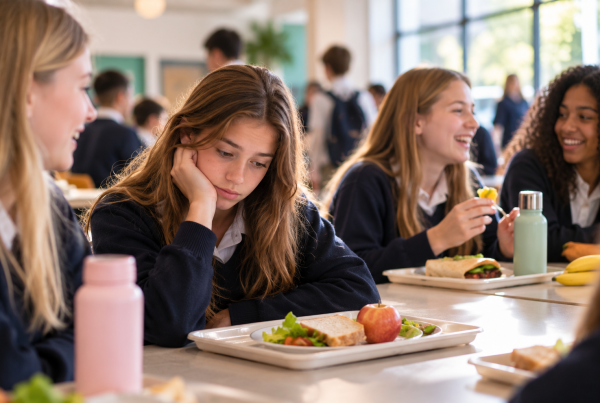
If a teacher has come to you recently saying they’ve noticed a group of Year 8 girls seemingly glued to TikTok swapping videos in corridors, talking about creators between lessons, mimicking trends you’re not imagining a new problem. It’s an increasingly common trigger for a referral or a quiet word in the staff room. The difficult part is knowing what, if anything, it actually means, and what to do about it.
It’s worth saying clearly at the outset: watching TikTok is not, on its own, a cause for concern. Most young people who spend time on the app are simply doing what their friends are doing. The more useful question for school staff isn’t “how much TikTok is this pupil watching?” but “is what she’s watching starting to change how she feels about food, exercise or her body?” That shift from policing the app to noticing the impact is the difference between a genuinely useful early intervention and a conversation that just makes a pupil more secretive.
This piece sets out what’s currently understood about the link between social media and eating disorders, the kinds of questions that open a conversation rather than shut one down, and where media literacy fits into PSHE and pastoral practice. It’s written for school counsellors, PSHE leads and pastoral staff, and it deliberately doesn’t describe the specific content, hashtags or accounts associated with pro-eating-disorder communities even with good intentions, that kind of detail can act as a route map for a pupil who’s vulnerable or already looking for it. The focus here is on what you can observe and do, not on the content itself.
Why “she’s on TikTok a lot” isn’t the whole story
Almost every Year 8 pupil is on some form of social media, and TikTok’s format short, algorithmically selected videos means two pupils sitting next to each other can be shown completely different content based on what they’ve previously watched, liked or lingered on. That’s worth knowing, because it means a teacher’s general sense that “the girls are all watching TikTok” tells you very little about what any individual pupil is actually seeing.
Not every health, fitness or nutrition account is harmful
It’s easy for concern about TikTok to tip into treating all nutrition, fitness or “wellness” content as a red flag. That’s not a helpful message to give pupils, and it can make open conversation harder rather than easier. Plenty of what young people watch is genuinely neutral or even positive recipe videos, workout content, creators talking sensibly about health. The aim isn’t to get pupils to avoid these topics altogether; it’s to help them tell the difference between balanced, evidence-based content and content that creates fear, guilt or obsession around food, exercise or appearance. That distinction is the one worth building into any pastoral conversation or PSHE session.
Signs social media may be affecting a pupil’s relationship with food and body image
Rather than trying to identify specific harmful accounts or trends, which changes constantly and isn’t something staff can realistically monitor it’s far more useful to notice changes in the pupil herself. Signs worth paying attention to include:
- increased anxiety or distress around food or mealtimes
- more frequent negative comments about her body or appearance
- suddenly cutting out entire food groups without a clear reason
- a growing preoccupation with “clean” or “healthy” eating
- compulsive or rigid approaches to exercise
- comparing herself unfavourably to influencers or creators
- expressing guilt after eating
- spending noticeably longer consuming appearance-related content
- frequent body-checking (in mirrors, photos or clothing)
- a change in mood that seems to follow time spent on social media
No single sign on this list is proof of a problem; plenty have other explanations, from normal adolescent self-consciousness to unrelated stress. What matters is a pattern, and a change from how that pupil normally presents.
Questions that open a conversation, not a confrontation
If you do want to raise this with a pupil, the way the conversation starts matters as much as the content. Questions that invite reflection tend to work better than ones that sound like an interrogation about screen time. Useful starting points include:
- “How does this content make you feel about yourself?”
- “What do you think this creator is trying to sell or promote?”
- “Do you think this reflects real life?”
- “How do you feel after watching these kinds of videos?”
- “Does this make food feel more enjoyable, or more stressful?”
These questions work because they’re curious rather than accusatory, and because they hand the pupil the tools to notice the effect for herself, rather than being told what to think.
Media literacy: the strongest tool schools already have
Of everything covered here, building media literacy is probably where schools can make the most consistent, lasting difference and it’s a skill that protects against far more than eating disorder content alone. These media literacy PSHE resources don’t need to be a standalone lesson; they work well folded into existing tutor time or PSHE strands on body image and online safety. Ideas worth building in include helping pupils understand:
- that platforms show you more of whatever you’ve already engaged with, so a feed can narrow quickly without a pupil realising it’s happening
- that likes and views are a measure of engagement, not accuracy
- that many creators giving health or nutrition advice have no relevant qualifications
- that images and videos are frequently edited, filtered or staged
- that wellness advice can still be harmful even when it’s framed as healthy, if it’s extreme or rigid
- that someone looking a particular way doesn’t mean their advice is sound or evidence-based
These are transferable critical thinking skills, not a one-off eating disorder lesson, and they tend to land better with pupils precisely because they’re not framed as a warning about a specific danger.
Broad red flags worth knowing, without the specifics
It’s possible to give staff a working sense of concerning content without describing the tactics, language or communities involved. In general terms, it’s worth being cautious of content that:
- promotes extreme or rigid food rules
- makes people feel guilty for eating particular foods
- suggests one body shape or size is superior to others
- encourages rigid, inflexible routines around food or exercise
- claims there is only one “correct” way to eat
- promises rapid physical transformation
- discourages seeking professional help
This gives staff something practical to watch for without pointing anyone — pupil or adult — towards the specific content that harmful communities use.
Supporting students with body image concerns: what to do next
- keep any conversation calm and non-judgemental rather than confrontational
- encourage open discussion about what she’s watching, rather than banning the app outright, which tends to push the behaviour further out of sight
- focus the conversation on wellbeing rather than appearance
- where relevant, model balanced attitudes to food and exercise yourself
- seek further support early if you’re concerned, rather than waiting to see if it resolves on its own
When to seek further help
If the signs above are persistent, worsening, or accompanied by physical changes, secrecy, or a pupil becoming distressed when challenged, it’s appropriate to involve your school’s usual safeguarding and pastoral referral routes, and to loop in parents or carers as part of that process, in line with your school’s existing safeguarding policy.
FAQs
Is it a problem if a Year 8 pupil watches a lot of TikTok?
Not on its own. Most pupils this age use social media heavily, and time spent on an app tells you very little by itself. What’s worth attending to is whether her relationship with food, exercise or her body seems to be changing, not the amount of time on the app.
Should schools try to identify specific pro-eating-disorder accounts or hashtags?
This isn’t something we’d recommend building into staff training or PSHE content. Describing specific accounts, hashtags or tactics can inadvertently act as a guide for a pupil who’s vulnerable or already searching for that material. It’s more effective, and safer, to focus on the changes you can observe in a pupil and on broad media literacy skills.
What if a parent raises this before we’ve noticed anything ourselves?
Take it seriously even if the pupil’s presentation at school doesn’t obviously match what’s being described at home young people can behave very differently in front of friends and staff than they do at home, and a parent is often picking up on changes that aren’t yet visible in the classroom.
Is all fitness or nutrition content on TikTok something to worry about?
No. Most of it is neutral, and plenty of it is genuinely helpful. The goal isn’t to make pupils wary of health content altogether, but to help them distinguish balanced, evidence-based content from content that creates fear, guilt or obsession.
How does this fit into PSHE?
Media literacy how algorithms work, how content is edited or staged, how to evaluate a creator’s credibility sits naturally within existing PSHE strands on body image, online safety and critical thinking, and doesn’t need to be taught as a standalone “TikTok” lesson.
Is there a link between social media and eating disorders?
Social media doesn’t cause eating disorders on its own, but for a pupil who’s already vulnerable, heavy exposure to appearance-focused or extreme wellness content can reinforce unhelpful beliefs about food, weight and body shape. That’s why the focus for school staff is on noticing changes in a pupil’s relationship with food and body image, rather than trying to police an individual app.
Related reading on JenUp
- Our 1:1 Eating Disorder Specialist Coaching page, for pupils or families who need more support than a school can provide alone
- Our Workshops page, for schools wanting a tailored staff or pupil session on body image, social media or eating disorder awareness
- Our Tools and Resources page for further material to share with staff or parents
- Toxic Masculinity & Misogyny in Schools — another schools-focused conversation from the JenUp podcast, for staff thinking about the wider social media and identity picture
- The full JenUp Podcast and Blogs library for more conversations like this one
A final word
Teachers noticing a group of pupils absorbed in TikTok isn’t, by itself, a red flag but it is a useful prompt to look a little closer at how those pupils are feeling about food, exercise and their bodies, rather than at the app itself. Building media literacy into everyday PSHE practice, learning to ask open questions, and knowing the broad signs to watch for will do far more for your pupils than trying to keep pace with whatever the current trend is.
If your school would like eating disorder awareness training for school staff, or a tailored workshop on body image and social media for staff, parents or pupils, get in touch via jenup.co.uk — or follow us on Facebook and Instagram at Ask JenUp for more resources like this.
Subscribe to the JenUp Podcast and follow us on Facebook and Instagram at Ask JenUp, or visit www.jenup.com for more resources on ADHD, eating disorders, and neurodivergence.