Build Your Child's Confidence with Positive Body Image Activities
A healthy body image starts at home. The conversations we have, the language we use and the behaviours we model all influence how children feel about themselves.
With increasing pressure from social media, appearance ideals and comparison culture, many young people are struggling with body confidence. Fortunately, there are simple activities that can help children appreciate their bodies for what they can do rather than how they look.
This free guide provides five practical body image activities that parents can use to build confidence, improve self-esteem and encourage a healthier relationship with their bodies.
DOWNLOAD THE GUIDE FOR PARENTS (PDF)Why is Positive Body Image Important?
Body image is how we think and feel about our bodies. Children begin developing these beliefs from an early age through family conversations, friendships, school experiences and social media.
When children develop a positive body image, they are more likely to:
- Feel confident in themselves.
- Develop healthy self-esteem.
- Appreciate what their body can do.
- Become more resilient to social media pressures.
- Build a healthier relationship with food and exercise.
Encouraging body appreciation rather than appearance can help reduce body dissatisfaction and support long-term wellbeing.
Five Body Image Activities to Try at Home
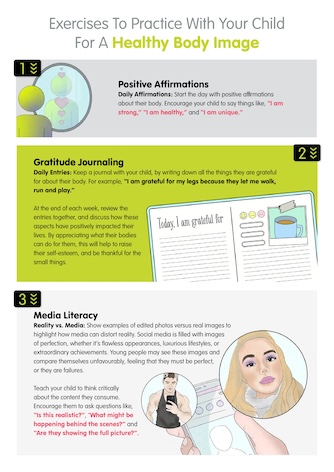
1. Practice Positive Affirmations
Encourage your child to begin each day with positive statements such as:
- “I am strong.”
- “I am kind.”
- “I am healthy.”
- “I am unique.”
Positive affirmations can help replace self-critical thoughts with kinder, more balanced thinking.
2. Keep a Body Gratitude Journal
Help your child focus on what their body does rather than how it looks.
For example:
“I’m grateful for my legs because they help me run and play.”
Reading the journal together each week encourages gratitude and improves self-esteem.
3. Develop Media Literacy
Talk about edited images, filters and unrealistic beauty standards.
Encourage questions such as:
- “Is this realistic?”
- “Has this image been edited?”
- “Are they showing the whole picture?”
Helping children think critically about social media can reduce comparison and improve body confidence.
4. Make Movement Fun
Exercise should help children feel stronger, happier and healthier—not simply change how they look.
Choose activities such as walking, cycling, dancing or playing outdoors together as a family. Focus on enjoyment and wellbeing rather than appearance.
5. Practice Mindfulness Together
Mindfulness activities such as yoga and breathing exercises help children notice how their body feels rather than how it looks.
These exercises can reduce anxiety, improve emotional wellbeing and encourage greater body acceptance.
FAQs
Why do teens struggle with body image?
Teenagers experience major physical and emotional changes while also facing pressure from social media, peer comparisons and unrealistic beauty standards. These influences can affect confidence and self-esteem. Encouraging positive conversations, media literacy and body appreciation can help build a healthier body image.
How does body image affect mental health?
Body image and mental health are closely connected. Negative body image can contribute to anxiety, low mood, reduced self-esteem and social withdrawal. In some cases, persistent body dissatisfaction can increase the risk of disordered eating or eating disorders.
How do I help my daughter with body image?
Create a positive environment by avoiding comments about weight or appearance. Encourage your daughter to appreciate what her body can do, model a healthy relationship with food and exercise, and discuss unrealistic messages from social media. If body image concerns begin affecting her wellbeing, seek support early.
At what age does body image develop?
Body image begins developing in early childhood. Positive conversations about bodies, abilities and self-worth can help children develop healthy confidence from a young age.
Can social media affect my child's body image?
Yes. Social media often promotes unrealistic beauty standards through edited images and carefully selected content. Teaching children to question what they see online can help reduce comparison and improve body confidence.
What activities improve body confidence in children?
Positive affirmations, gratitude journaling, mindful movement, family activities and media literacy discussions can all help children appreciate their bodies and develop lasting confidence.
Download Your Free Healthy Body Image Activities Guide
This free guide includes five practical activities to help children develop confidence, strengthen self-esteem and build a healthier relationship with their bodies.
✔ Positive affirmation activities
✔ Body gratitude journaling
✔ Media literacy exercises
✔ Family movement ideas
✔ Mindfulness activities
Need Additional Support?
If you’re concerned about your child’s body image, confidence or relationship with food, early support can make a lasting difference.
Jenny Tomei provides:
- Parent workshops
- Body image support
- Eating disorder and disordered eating guidance for young people
- School workshops
- Parent webinars
- Student wellbeing programmes
Whether you’re looking for practical advice or personalised support, JenUp is here to help families build healthier relationships with food, body image and wellbeing.
Contact: info@jenup.com
Copyright © Jenup Community CIC 2026. All rights reserved.
Schools are welcome to download, print and use this resource internally with pupils and staff for educational purposes.
This resource may not be sold, edited, rebranded, or redistributed (including uploading to public websites or sharing outside your school/trust) without written permission from Jenup Community CIC.