Early signs, what helps at home, and where to find support
If your child is autistic or has ADHD, mealtimes can be complicated. “Safe” foods, strong reactions to textures or needing the same routine can all be part of family life.
But autism and eating disorders, and ADHD and eating disorders, are more closely linked than many parents realise. Because restricted eating can already be part of your child’s profile, a developing eating disorder can be easy to miss.
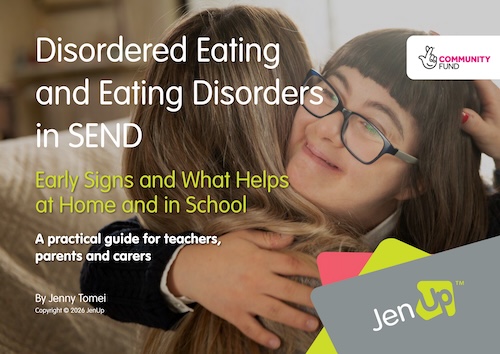
This free guide by eating disorder therapist Jenny Tomei, funded by the National Lottery Community Fund, helps you notice changes, get curious about what’s behind them, and know what to do next.
DOWNLOAD THE FREE PARENT GUIDEAutism and Eating Disorders
Research into autism and eating disorders shows autistic children experience eating difficulties at higher rates. The clearest overlap is with ARFID: a 2025 meta-analysis found ARFID in around 11% of autistic groups studied. Autistic young people can also develop anorexia, bulimia and other eating disorders.
Key point: sensory eating differences and an eating disorder can coexist. One doesn’t rule out the other, so keep noticing changes.
ADHD and Eating Disorders
Research on eating disorders and ADHD has found a higher risk in people with ADHD. Your child might forget to eat all day, then feel ravenous in the evening, or struggle with impulsivity around food.
ADHD medication and eating disorders
Stimulant ADHD medication often reduces appetite during the day. This can look like restriction, hide a developing eating disorder, or feel like a “benefit” to a child worried about their weight. Ask your child’s prescriber about planning meals around it, and never change medication without medical advice.
Signs You Might Notice at Home
- A very narrow range of foods over a long time
- Distress when food brands or mealtime routines change
- Avoiding eating in front of family
- Growing worry about weight, shape or calories
- Disappearing after meals, or exercising more
- Tiredness, dizziness, irritability or changes in sleep
Patterns and change over time matter most.
What Can Help at Home
Keep mealtimes calm and predictable. Ask open questions rather than “why won’t you eat that?”, and avoid comments about weight or appearance. Keep notes on changes for your GP, and talk to your child’s school. This isn’t something you caused, and you deserve support too.
FAQs: Autism, ADHD and Eating Disorders
What is ARFID disorder?
ARFID (avoidant/restrictive food intake disorder) is an eating disorder where a child restricts food because of sensory sensitivities, fear of choking or vomiting, or low interest in eating, rather than worries about weight or shape.
Is there a link between autism and eating disorders?
Yes. Autistic children experience eating disorders at higher rates, especially ARFID, but also anorexia, bulimia and others.
Do people with ADHD struggle to eat?
Many do. Forgetting to eat, irregular eating and medication-related appetite loss are common. If eating is causing distress or affecting health, speak to a GP.
Can ADHD medication affect eating disorders?
It can reduce appetite, which may mask or increase eating disorder risk. Always talk to the prescriber before making changes.
Download the Guide for Parents and Carers
Book Jenny for a One-to-One Consultation
Copyright © Jenup Community CIC 2026. All rights reserved.
Schools are welcome to download, print and use this resource internally with pupils and staff for educational purposes.
This resource may not be sold, edited, rebranded, or redistributed (including uploading to public websites or sharing outside your school/trust) without written permission from Jenup Community CIC.