What this PDF is
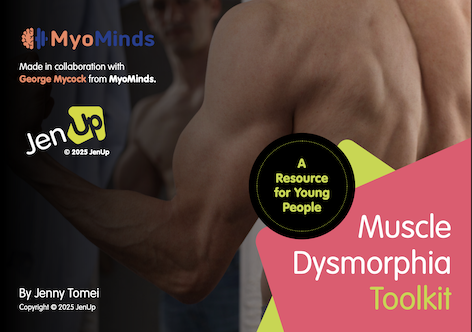
This PDF is a Muscle Dysmorphia Toolkit created as a resource for young people by JenUp, in collaboration with George Mycock from MyoMinds. It explains what is muscle dysmorphia, how it can affect daily life, and what support can look like in real terms.
What is Muscle Dysmorphia?
The toolkit explains that muscle dysmorphia is a mental health issue where someone feels very anxious or upset because they think they are not muscular or lean enough, even if others think they are. It also clarifies that muscle dysmorphia is a type of Body Dysmorphic Disorder (BDD), which can seriously interfere with life, not just confidence.
A real-life story that makes it relatable
Early on, the resource includes a “muscle took over my life” section and a first-person-style story showing how gym pressure can shift into obsession. It describes constant mirror checking, fear of missing workouts, intense worry about food, and the emotional impact when someone believes they will only be liked if they look a certain way.
Muscle dysmorphia symptoms and what it can look like
A key section breaks down muscle dysmorphia symptoms in clear, recognisable examples. These include spending hours thinking about getting more muscular, feeling unable to rest, avoiding events because of gym or food worry, checking the body repeatedly, wearing baggy clothes to hide the body, eating in extreme ways, and considering steroids or supplements.
A helpful myth-buster: you can’t tell by looking
The toolkit directly answers a common question: you can’t reliably tell muscle dysmorphia by appearance. It explains that people can have any body type and still feel intense distress. It also notes that muscle dysmorphia is often discussed in boys and men, but anyone can experience it, and social media can fuel comparisons.
How to help a friend without making it worse
There’s a practical section on what to do if you think someone has muscle dysmorphia. It contrasts three common reactions – avoiding, attacking and supporting – and guides readers toward a kinder approach. It includes example phrases that keep things calm and non-blaming, like noticing stress and offering to talk.
What to do if you think you have muscle dysmorphia
The toolkit is direct and reassuring: if you think you have muscle dysmorphia, you’re not broken or dramatic, and it’s okay to reach out. It suggests speaking to trusted adults, friends, school staff, or a GP, and it shares further resources (including the Body Dysmorphic Disorder Foundation).
Seeking help framed as strength
Another section reframes help-seeking as self-development, not defeat. It explains how trained support can help people understand unhelpful thoughts, learn coping skills, and feel calmer and more confident over time.
Supplement and steroid myth-busting
A dedicated page tackles confusing online claims about protein shakes, amino acids, fat burners and steroids. It emphasises that supplements are often overhyped, that some products can be misleading, and that steroids can cause serious harm and may be illegal to sell in many places.
FAQs
What is muscle dysmorphia?
Muscle dysmorphia is when someone feels very distressed because they believe they are not muscular or lean enough, even if others disagree.
What are muscle dysmorphia symptoms?
Common muscle dysmorphia symptoms include obsessive thinking about muscle/lean-ness, skipping social events due to food or gym worry, fear of rest days, body checking and extreme eating routines.
How do people with muscle dysmorphia see themselves?
Muscle dysmorphia (MD) is a form of body dysmorphic disorder (BDD) where someone becomes intensely focused on the belief that they aren’t lean or muscular enough. People with MD may see themselves as small or weak, even when others view them as average-sized or very muscular.
What is Vigorexia?
Vigorexia, also known as muscle dysmorphia, is a form of body dysmorphic disorder (sometimes called reverse anorexia) where someone becomes fixated on the belief that they are too small, too weak, or not muscular enough even if they are already very muscular. This can lead to compulsive behaviours such as over-exercising, strict dieting and sometimes using substances like steroids in pursuit of a “perfect” body.
How should I talk to a friend I'm worried about?
Avoid labels and blame. Lead with kindness, notice stress and offer support and space to talk.
What should I do if I think I have muscle dysmorphia?
Tell someone you trust and consider support from school staff, a GP, or specialist organisations, which we have mentioned inside the PDF.
Who is most affected by muscle dysmorphia?
Muscle dysmorphia is more common among men than among women. Bodybuilders and other people who lift weights are at a higher risk than the general population. Also, competitive athletes face a higher risk compared to noncompetitive athletes.
Conclusion
This toolkit is a clear, youth-friendly guide that explains what is muscle dysmorphia, how muscle dysmorphia symptoms can show up in everyday life, and how to get support without shame. It also offers grounded myth-busting around supplements and steroids and encourages help-seeking as a strength.
Download the JenUp Muscle Dysmorphia Toolkit
Copyright © Jenup Community CIC 2026. All rights reserved.
Schools are welcome to download, print and use this resource internally with pupils and staff for educational purposes.
This resource may not be sold, edited, rebranded, or redistributed (including uploading to public websites or sharing outside your school/trust) without written permission from Jenup Community CIC.