Last Updated on January 20, 2026 | Published: January 20, 2026 published by Jenny Tomei
What Is Disordered Eating?
Disordered eating describes a range of eating behaviours and attitudes that may negatively affect physical or emotional well-being but do not necessarily meet the criteria for a diagnosed eating disorder.
This can include:
- irregular or chaotic eating
- skipping meals
- rigid food rules
- anxiety around eating situations
- guilt or shame linked to food
- not prioritising food due to stress, low mood, or overwhelm
- using food as a way to control things
According to the NICE guidelines, young people aged 11 to 25 years and parents of children aged 8 to 16 years completed the 5 screening questions from the Development and Well-Being Assessment (DAWBA) Eating Disorders module.
‘Screening positive’ does not mean that you have a clinically impairing eating disorder, such as anorexia or bulimia but indicates an increased likelihood of broader problems or difficulties with eating.
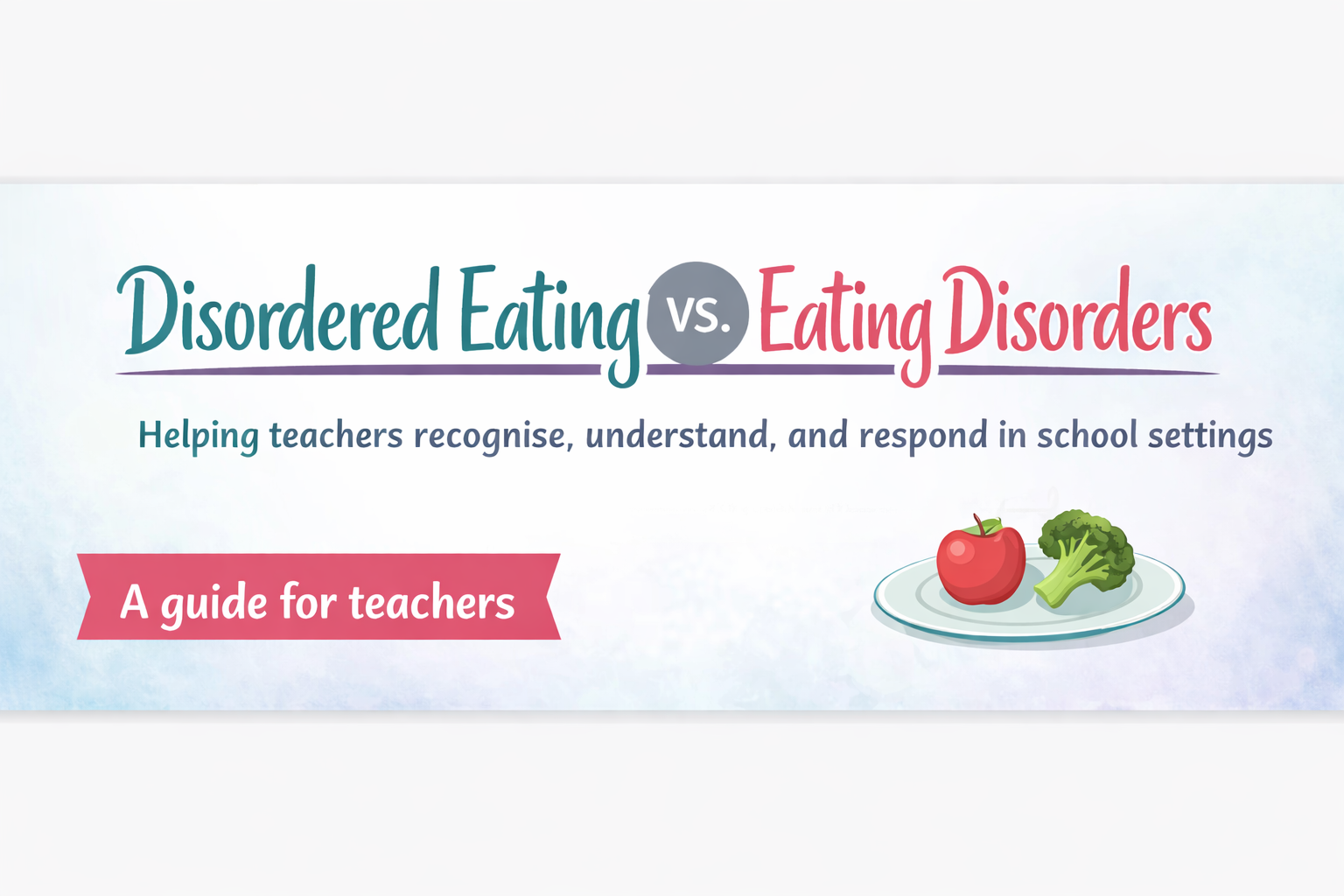
Disordered Eating vs Eating Disorders
It’s important to understand the difference between disordered eating and an eating disorder.
Disordered eating:
- exists on a spectrum
- is very common
- may come and go
- does not always involve body image or weight concerns
- Often improves with early support
Eating disorders are:
- diagnosable mental illnesses (such as anorexia nervosa, bulimia nervosa, binge eating disorder, or ARFID)
- associated with significant psychological distress
- involves concerns about shape and weight
- usually require specialist treatment
Disordered eating does not mean someone has an eating disorder, but it can increase risk over time if left unaddressed. Early support can be protective.
How Disordered Eating May Present in School
Teachers may notice:
- pupils regularly avoid or skipping lunch
- increased self-consciousness around eating
- copying peers’ food avoidance
- withdrawal from social eating spaces
- fatigue, reduced concentration, or irritability
- heightened anxiety around routine changes involving food
No single sign confirms a problem, patterns and changes over time are key!
How Teachers Can Support Pupils
1. Use Supportive Language
- avoid labelling foods as “good” or “bad”
- avoid comments about weight, bodies, or eating amounts
- Focus on what food does (energy, focus, growth)
2. Create a Safe Eating Environment
- Be mindful of the sensory and social demands of lunch spaces
- allow flexibility where possible
- avoid pressure, rewards, or punishment around eating
3. Notice Patterns, Not Perfection
- Look for changes over time rather than isolated incidents
- Share observations with safeguarding or wellbeing leads
- Trust your instincts if something feels different
4. Respond with Curiosity, Not Correction
If a conversation is needed:
- choose a quiet, private moment
- Focus on wellbeing and support, not food rules
- Avoid giving advice or instructions on eating
SEND, ARFID, and Eating Differences
Not all eating difficulties are linked to body image! This is also key.
Some pupils, particularly those with SEND or autism, may experience eating challenges due to:
- sensory sensitivities
- need for predictability
- anxiety around change
- black-and-white thinking – this is why language around food is very important.
ARFID (Avoidant/Restrictive Food Intake Disorder) is a recognised eating disorder that is not driven by body image concerns, and often overlaps with neurodivergence.
Understanding the reason behind eating behaviour is essential to providing the right support.
When to Escalate Concerns
Follow your school’s safeguarding procedures if:
- A pupil’s physical health may be affected e.g. fatigue, sometimes weight loss but NOT always.
- Eating avoidance is increasing
- Distress is high or worsening
- The pupil is withdrawing significantly or struggling to function
Teachers are not expected to diagnose; early referral is protective.
Final Thoughts for Schools
Disordered eating is best understood as a signal, not a diagnosis. With calm, informed, and compassionate responses, schools can play a key role in reducing harm and supporting wellbeing.
Early understanding and appropriate action can prevent difficulties from becoming more entrenched and help pupils feel safer, supported, and better able to learn.
Useful Links:
Body Image Toolkit and other Resources – https://jenup.co.uk/eating-disorder-resources/
NHS Eating Problem information – https://digital.nhs.uk/data-and-information/publications/statistical/mental-health-of-children-and-young-people-in-england/2023-wave-4-follow-up/part-5-eating-problems-and-disorders#:~:text=In%2011%20to%2016%20year,20.8%25%20compared%20with%205.1%25